Release Notes
Stay up to date on new functionality and system improvements in BigPanda.
You can get notified of BigPanda releases and updates right in your inbox. Register here to get notified of BigPanda releases and updates right in your inbox.
Latest in 2026
The following features have been released in the current month:
AI Detection and Response Releases October 2026
AI Triage tab
AI Triage now has a dedicated tab in the Incident Details pane, next to the Overview tab. The AI Triage tab is the default AI view for all AI Detection and Response organizations and replaces the AI Overview pane.
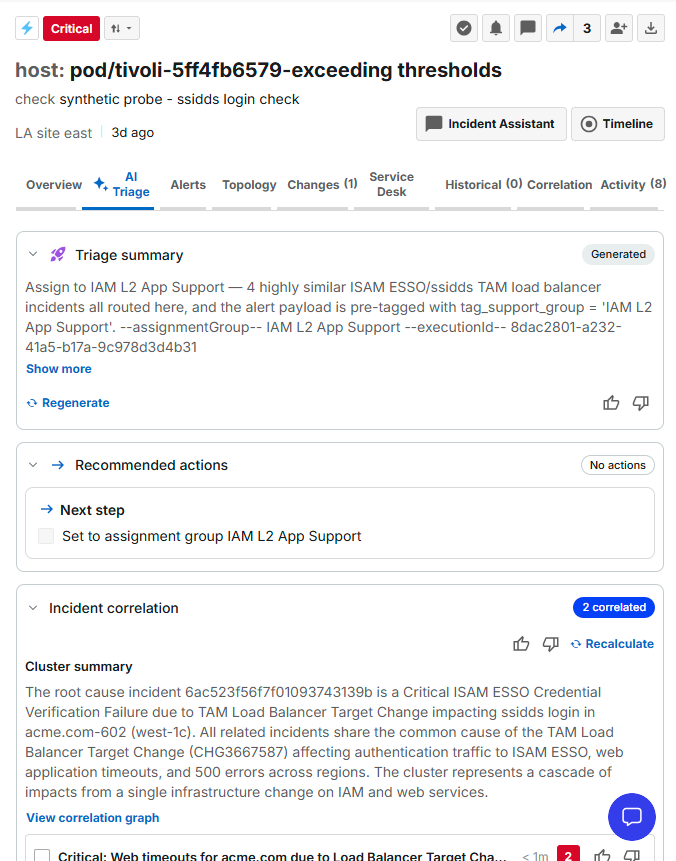
AI Triage tab
The AI Triage tab shows the same results as the AI Overview pane. Your AI Triage configuration does not change.
If you used the AI Overview pane before this change, an in-product notification appears in the console to show where AI Triage moved.
See the View incidents in the single-pane console documentation for more information.
Integration Studio Releases
Choose where an Integration Studio workflow starts
Integration Studio workflows now run from a designated start node instead of the first node in the configuration. A Start badge marks the start node on the canvas. To move it, open the menu on any node that has no incoming connection and select Set as start.
Existing workflows open with their current first node set as the start and run as they did before. Workflows generated from a prompt and new workflows built on a blank canvas get a start node automatically.
For details, see Start node in the Integration Studio documentation.
System Improvements
L1 Agent in ServiceNow v0.7.0 — The L1 Agent is now available in Service Operations Workspace. After installing the update set, a BigPanda tab appears automatically in the incident sidebar; no additional configuration is required.
September 2026
The following features were released in September 2026:
BigPanda Analytics Improvements
Several key improvements were made to BigPanda Analytics. You can now:
Make a copy of a widget
Send scheduled reports to users without a BigPanda account
See parent folders in dashboard search results
Share all dashboards within a folder
Move subfolders out of parent folders
See the BigPanda Analytics documentation for more information.
System Improvements
BPFL now supports the TOP function to cap a long array to a shorter subset. Choose how many values and whether they return from Newest or Oldest.
AI Incident Assistant Release Notes - September 2026
The following AI Incident Assistant features were released in September 2026:
New Observability Integrations
Several new observability integrations are now available:
AWS Cloudwatch
Azure Data Explorer
Azure Monitor
M365 Service Health
Sitescope
Wiz
See the Observability Integrations documentation for more information.
Knowledge Management
Biggy can now read, update, and create knowledge base articles in your knowledge bases using the Create Knowledge Page action.
Integrations with the following knowledge management tools are currently available:
Confluence
Notion
See the Knowledge Management Integrations documentation for more information.
New Source Control Integrations
Integrations with the following source control tools are now available:
Azure DevOps
Bitbucket
Harness
See the Source Control Integrations documentation for more information.
BMC Helix Support
Biggy now works natively with BMC Helix, bringing in the intelligence BigPanda customers rely on for ServiceNow, including a real-time retrieval agent and indexing pipeline so Biggy can read and reason over your BMC Helix data.
See the BMC Integration documentation for more information.
Connect Biggy to your AI Tools
Biggy now works inside the AI tools you already use. Set up AI Clients, and then pick your tool on the new Connect to Biggy page to allow Biggy to ask about incidents, changes, on-call status, and your knowledge base via your editor or chat app.
Biggy EU
Biggy is now available as a fully EU-resident instance. Your data stays in the EU end-to-end. Storage, processing, and the AI models Biggy runs on all operate within the region, so you get the same AIOps capabilities with European data residency built in.
See the Use BigPanda in the EU documentation for more information.
Organizational Teams API
Use the Organizational Teams API to list the organizational teams defined in Administration > General Settings > Teams and see who belongs to each. With this API, external systems can keep user-to-team mappings automatically up to date.
See the Organizational Teams API documentation for more information.
Status Pages API
Create and manage incident status pages to facilitate communication with stakeholders during and after incidents using this new API.
See the Status Pages API documentation for more information.
Major Incident Management (MIM) Improvements
Several improvements were made to Major Incident Management (MIM). You can now:
Add and announce communication channels when the incident priority escalates.
Post incident updates back to the originating Slack thread.
Publish MIM output to the linked ServiceNow problem record, or create a new record.
Configure output verbosity with concise defaults and anti-repetition controls.
Execute a major incident from Biggy Chat.
Use Build with Biggy to design a MIM template using natural language.
See the Major Incident Management (MIM) documentation for more information.
AI Incident Prevention Release Notes - September 2026
The following AI Incident Prevention features were released in September 2026:
BMC Helix Change Risk
Biggy can now assess changes in BMC Helix ITSM (Remedy) rather than in ServiceNow. Your changes are scored and listed the same way, and they keep the field names and the record links your teams already use.
See the BMC Integration documentation for more information.
Upcoming Changes
Get a week-at-a-glance view of scheduled changes and their predicted risk scoped to a single risk profile. Use it to see how many changes are coming, which ones need attention, and when they start across the week.
See the Upcoming Changes documentation for more information.
Change Risk Linked Content
Biggy can now read links from change plans in Azure DevOps, Confluence, GitHub, or Jira. A link is created to the plan it points to, rather than as an empty field.
See the Change Details documentation for more information.
Change Risk Mitigation
You can now mark mitigation suggestions that your team has completed as addressed. AI Incident Prevention will then reassess the list of suggestions based on what has been done.
See the Change Risk Prediction documentation for more information.
Updated Change Risk Settings
The following updates have been made to change risk settings:
The page has been organized into additional tabs, making it easier to navigate.
The opening tab of a change record can now be customized at Organization-Wide Settings > Scoring & Limits > Change Records: Opening Tab.
Pre-select the exception policy for CAB reports generated using a specific profile. Configure this at Profile-Specific Settings > Score & Inputs > CAB Exception Policy.
See the Change Risk Settings documentation for more information.
System Improvements
You can now combine CSV, ServiceNow, and Jira sources into a single Large Context Analysis.
Unified Analytics Deprecation
The new BigPanda Analytics is now available, offering a more intuitive, AI-powered dashboard experience.
The legacy Unified Analytics will stay editable until November 16, 2026, and will retire on January 4, 2027.
August 2026
The following features were released in August 2026:
BigPanda Analytics
We're rolling out an upgraded native analytics experience built right into BigPanda. Once activated for your organization, current active dashboards will be ready to use with no setup, so your team can start exploring data across the platform from day one. The new experience will begin rolling out to all organizations starting September 9, 2026.
With the new Analytics, you get:
Intuitive native dashboards: Dashboards run natively in BigPanda for a smoother experience.
AI-powered insights: Use AI to explore your data and ask questions in plain language.
All your data in one place: Bring together data from across BigPanda in a single view.
The legacy analytics view will be editable until November 16, 2026, and will retire on January 4, 2027.
See the BigPanda Analytics documentation for more information.
AI Detection and Response
Biggy Agent in the ADR single pane of glass
The Biggy conversational experience is now available directly in the AI Detection and Response (ADR) console, so L1 NOC teams can chat with Biggy about the incident they're working on, pulling in historical context, post-mortems, resolution paths, and institutional knowledge without leaving ADR or opening Slack or Teams.
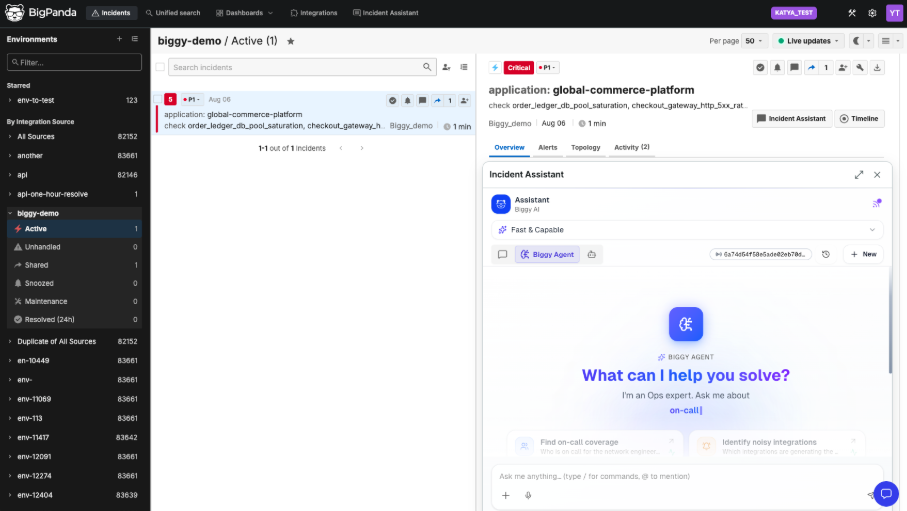
Biggy Agent in the Incident Feed
Biggy Agent in ADR offers the same capabilities available in the web app, Slack, and Microsoft Teams. Available actions may vary based on your organization's configuration.
This feature is available to organizations with both AI Detection and Response and AI Incident Assistant BigPanda products.
Read more about how to streamline incident triage and investigation in the Biggy Agent in the ADR console documentation.
ServiceNow App 3.1
The BigPanda - ServiceNow v3 store app gained several incident-mapping and CMDB controls. All new options are off by default, so upgrading changes nothing unless you opt in.
Block resolve on tags: Keep specific incidents open in ServiceNow by tag. When a BigPanda incident matches the configured tag expression, the resolve-and-close sync is skipped and the ServiceNow incident state is left untouched. Because any incident tag can be used, this also lets you scope automatic resolution to particular assignment groups, environments, or services, so BigPanda resolves only the incidents you choose. Uses the same tag-expression grammar as the rules engine.
Expanded transform rules engine: Rule conditions now support boolean tag expressions, presence matching, and not-equals. Alert-level conditions can filter, select, and quantify the alerts in an incident, and a new action copies values from an incident's alerts into ServiceNow fields.
Governed CMDB auto-create: Choose the CMDB class for auto-created CIs and gate creation behind a required-tag allowlist.
CMDB dot-walk enrichment: Enrich CMDB columns one hop away by selecting a reference field and sub-field.
Affected CIs on incidents: Optionally write the CIs resolved from alert hosts to the incident's Affected CIs related list.
Email-based assignment: A tag mapped to
Assigned tothat contains an email address now resolves to the matching ServiceNow user.
See deeper BigPanda insights and greater noise reduction in Jira Service tickets with the latest Jira Service Management(JSM) Integration.
Create a ticket from an incident, map BigPanda fields onto JSM fields, template the summary and description, and keep resolution state in step between the two systems. Improved functionality includes:
Field mapping: Including priority, assignee, and incident tags.
Status mapping and status sync: Keep both systems aligned no matter where your team is working.
Bidirectional resolve: Configurable close behavior between JSM and BigPanda.
Jira issue URL: Posted back onto the BigPanda incident on ticket creation.
Summary & description templates: Including default templates for complex fields such as AI Analysis
Correlated alerts table: For granular visibility.
See our Jira Service Management documentation for details on full JSM-BigPanda functionality.
Health Dashboard Environment Filters
Filter your health dashboards to exclude or include only specific environments so that your team sees relevant services. The new filter option is available at Settings > Health Dashboard.

See the Health Dashboard Configuration documentation for more information.
Dashboards navigation tab
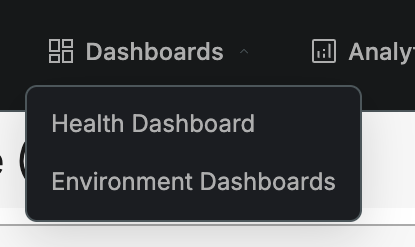
We've streamlined console navigation with a new Dashboards tab that brings your real-time and environment views together in one place.
The Dashboards tab appears between Unified search and Analytics, replacing the separate Dashboards and Health Dashboard tabs.
Open the Dashboards dropdown to find the Health Dashboard and Environment Dashboards (previously named Dashboards). All existing dashboard functionality will stay the same.
System Improvements
Actions performed using a service account API key now appear in the activity log under the service account name.
Personal timezone adjustment is available to all organizations through the Personal settings menu.
On the incident overview, any incident that has been reopened will have the reopen icon with a count of the number of times the incident was reopened.
AI Incident Assistant Releases August 2026
The following AI Incident Assistant features were released in August 2026:
Report Templates
Design reusable, branded layouts for Biggy-generated reports. Set the theme, logo, confidentiality banner, and section layout once. Use the template for PDF, DOCX, or CSV exports.
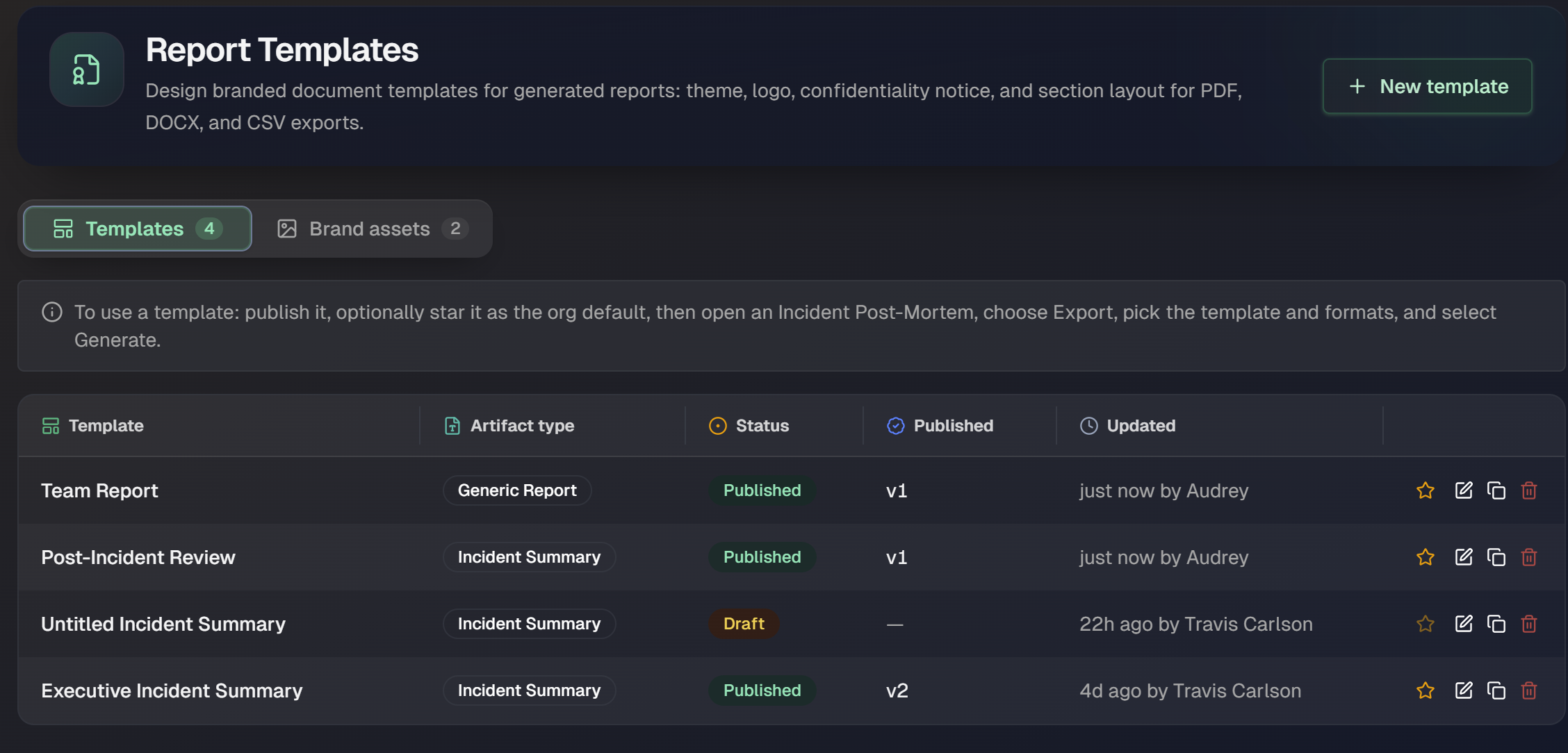
See the Report Templates documentation for more information.
Email Templates
Create reusable HTML layouts that Biggy can apply when sending emails. Scheduled workflow reports, shared responses, and agent updates all render in the template you choose. Templates ensure every message your organization sends maintains a consistent, on-brand look.
See the Email Templates documentation for more information.
Timezone Display
Define the timezone Biggy uses for timestamps in generated output across Slack, Teams, web chat, and the API.
Timezone settings are available in the web app at Manage > Administration > General Settings. See the General Settings documentation for more information.
Name Format
Configure how Biggy interprets directory display names when greeting people and when generating summaries, decisions, owners, and action items.
Name format settings are available in the web app at Manage > Administration > General Settings. See the General Settings documentation for more information.
Slack Channel Auto-Archive
Automatically archive Slack channels that Biggy created for major incidents once the incident is closed and the channel has gone quiet.
Slack Channel auto-archive settings are available in the web app at Manage > Administration > General Settings. See the General Settings documentation for more information.
Organization Branding
Define the Organization Logo, Display Name, and Accent Color used by Biggy-generated presentations.
Organization branding settings are available in the web app at Manage > Administration > General Settings. See the General Settings documentation for more information.
Snowflake Integration
Connect Biggy to your Snowflake account to query warehouse tables with read-only SQL, run governed semantic-view queries, and search indexed documents.
See the Integrations documentation for more information.
AWS Health Integration
Connect to the AWS Health Dashboard so Biggy can correlate incidents with AWS-side events affecting your account.
See the Observability Integrations documentation for more information.
Service API Keys
Create API keys with limited, scoped permissions for a specific service.
See the API Keys documentation for more information.
MIM Template Updates
Multiple updates were made to Major Incident Management (MIM) template configuration. The following features are now available:
Broadcast channels can be used as a dynamic output destination.
Bridge calls can be added after a MIM starts.
On demand, on mitigation, and on priority change schedule types added for MIM actions.
Default banner action items are configurable per template.
Bridge calls can be created based on priority level.
Recurring actions can be scheduled based on priority.
Dynamically created entities are automatically added to an action’s context.
See the Major Incident Management (MIM) Templates documentation for more information.
System Improvements
Status page links can be accessed without a web app login
Users can delete incident post-mortems
Transcriptions can be paused and resumed
ServiceNow PTasks can be created from incident post-mortem action items
The Create ITSM Ticket Action has the option to post a summary work note
AI Incident Prevention Releases August 2026
The following AI Incident Prevention features were released in August 2026:
Change Analytics Updates
The Change Analytics page now includes two new tabs:
Feedback: Review the ratings that reviewers submit on individual change risk assessments.
Usage: Track your organization's adoption of Change Risk.
See the Change Analytics documentation for more information.
Create PTasks in Large Context Analysis
Users can now create PTasks in Large Context Analysis under existing ServiceNow problems.
See the Large Context Analysis documentation for more information.
New Change Risk Settings
The following new configuration settings were added for Change Risk:
ServiceNow Work Note Limit: Define the maximum number of characters per work note posted back to ServiceNow
Derived Tags: Define reusable tags extracted from each change's data during risk rating.
System Improvements
Improvements were made to change risk filtering.
July 2026
New features released in July 2026: Web app redesign, and ServiceNow data connector required fields update.
AI Incident Assistant and Prevention web app redesign
A major redesign of the AI Incident Assistant and Prevention web app was deployed. Biggy now plans like a seasoned incident responder, learns your environment over time, and proposes system-changing action for your approval first, helping your team resolve incidents faster with less manual effort.
Highlights of the upcoming release:
Step-by-step transparency: see what Biggy checked and why before acting on a result.
Persistent memory: past incidents and proven fixes carry forward across conversations, turning each incident into future prevention.
Your playbooks, your tools: author custom runbooks and connect your own tools, with out-of-the-box support for 18+ observability and ITSM integrations.
Safe by design: actions that change a system, such as opening a ticket or paging on-call, are proposed for approval and remain read-only until you confirm.
Guided setup: an interactive walkthrough helps new teams get productive from day one.
See the Improved AI Incident Assistant and Prevention Web App page for more information.
System Improvements
Added fields required for business value reporting to the ServiceNow Data Connector.
June 2026
New features released in June 2026: Multiple Realtime Health Dashboards, ADR Improvements
AI Detection and Response Releases June 2026
Multiple Realtime Health Dashboards
Take at-a-glance visibility to the next level with multiple real-time dashboards.
Up to 20 dashboards: Visualize real-time health based on business groups, services, domains, and more. Switch between dashboards quickly to drill down or change focus.
Individual configuration per-dashboard: Each dashboard is separately configured, allowing flexibility to drill down and splice data based on individual tags or business impact rules.
Familiar configuration list: Manage and view dashboard settings in bulk with the Health Dashboards setting page.
Read more about configuring setting to fit your team needs in the Health Dashboard documentation.
ADR System Improvements
Hardened security for Pagerduty integrations.
New Ansible integration version available for download.
AI Incident Assistant Releases June 2026
Multi-Org Accounts
Organizations with multiple web app instances, such as dev and sandbox, can now log in to each instance with the same account using SSO. If you’re interested in enabling this functionality, contact your BigPanda account team.
May 2026
New features released in May 2026: Health Dashboard Improvements
New Documentation Site Layout
The BigPanda documentation site layout will be updated on May 19, 2026. Find answers more easily with a new organization and refreshed content.
AI Detection and Response Releases May 2026
Health Dashboard Improvements
The Health Dashboard is seeing major improvements, including a new, more interactive UI, and new default settings.
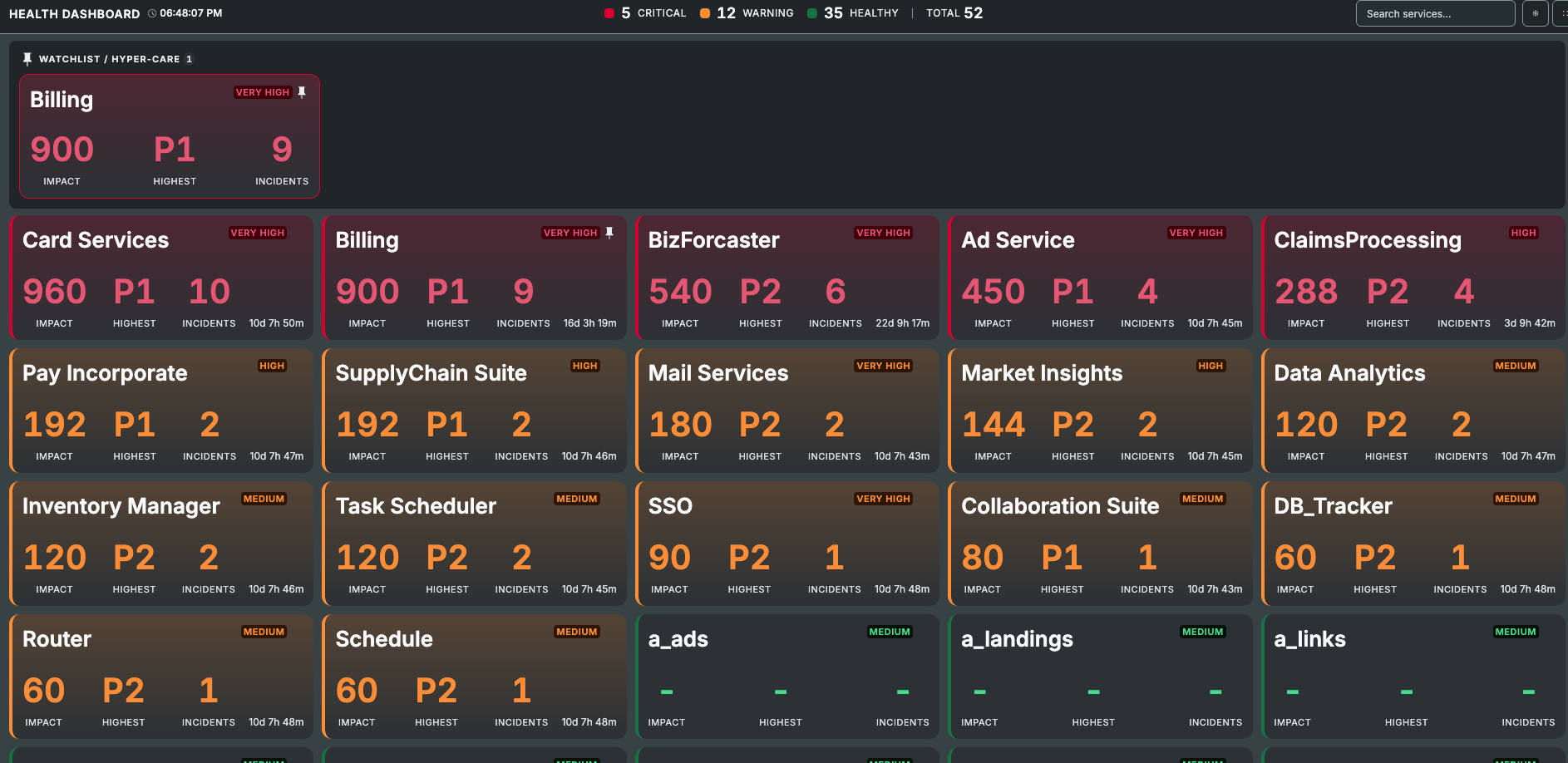
Health Dashboard Responsive UI
Default Tier for new services: Administrators set a default tier once, and all newly added services get it automatically. No more setting tier one-by-one when bulk-adding services.
Click anywhere on a tile: Green tiles are now clickable. Click anywhere in the tile area to open the service drill-down.
Multi select and apply tier to services : Set multiple services' tiers at once.
New design : Prominent impact score, bigger text, modern colors and some other touchups.
Responsive design: The dashboard adapts to screen size, so bigger screens like a NOC TV fit more services in view.
Smarter tile sizing: Critical and Warning tiles grow according to score whenever space allows.
Status filter: Filter the view by status. For example, hide Healthy services to focus on services that need attention.
Bulk service management: For orgs managing hundreds of services, you can now bulk-add and update services. Upload CSVs through the UI or API.
Read more about the available features in the Health Dashboard documentation.
Primary Alert Configuration
When multiple alerts are correlated into a single incident, a single alert is designated as the Primary Alert. This alert plays an important role in downstream automations and AI functionality.
You can now define and manage primary alerts with configurable logic and manual overrides.
In addition, the primary alert is now available across the BigPanda system to add context for incident triage and remediation.
BPFL in Incident tags (
{primary_alert.host})Outbound integrations (email v2, webhook v2, Teams)
Unified Analytics
Read more about managing and using primary alerts in the Primary Alert Configuration documentation.
Integration configuration version history
Protect your system from accidental configuration changes with the ability to quickly roll back to previous configurations.
Every change to an OIM or Email Parser integration config is now automatically versioned, no more fear of overwriting something that was working. Every save creates a new version, and you can list, inspect, diff, and restore any past version at any time via the integration configuration API.
Every change to an OIM or Email Parser integration config is now automatically versioned, no more fear of overwriting something that was working. Every save creates a new version, and you can list, inspect, diff, and restore any past version at any time via the integration configuration API.
Console system improvements May 2026
Splunk 10.x support - update to the latest BigPanda-Splunk add-on through Splunk's standard Manage Apps > Update flow
AI Incident Assistant Releases May 2026
The following AI Incident Assistant features were released in May 2026:
Custom Agents
Build reusable AI specialists in the web app with Custom Agents. These focused agents consistently handle the specifics of a class of work, such as knowledge base review, change risk analysis, or ticket triage, regardless of who initiates it.
See the Custom Agents documentation for more information.
Routing Insights
The Integrations Routing Insights tab displays information about observability and on-call integration routing failures. If you have multiple instances of a single integration, routing failures can occur when Biggy cannot determine which instance to route a request to.
See the Routing Insights documentation for more information.
Integration Error Visibility
Use the Integration Errors tab to track current issues with your integrations.
See the Integration Errors documentation for more information.
Transcription Settings
Configure how the Biggy transcription bot behaves when joining and leaving transcribed meetings.
See the Transcription Settings documentation for more information.
Biggy Assist
Biggy Assist is a scoped ServiceNow application published by BigPanda that brings AI Incident Assistant directly into the ServiceNow Now Assist panel. It gives IT operators a natural-language, conversational interaction with AI Incident Assistant without leaving the ServiceNow interface.
See the Biggy Assist documentation for more information.
GitLab Integration
Use the GitLab integration to investigate recent code changes, merge requests, commits, diffs, and CI/CD pipelines.
See the GitLab documentation for more information.
System Improvements
A notification now appears in the web app when more than one user attempts to save the same configuration setting simultaneously, preventing overwrites.
MIM now supports custom priority labels.
You can now configure multiple instances of the same type of on-call integration.
Additional download formats were added for MIM executions.
AI Incident Prevention Releases May 2026
The following AI Incident Prevention features were released in May 2026:
CAB Reports
Generate structured reports for Change Advisory Board meetings in the Change Risk Dashboard on the CAB Report tab.
See the CAB Report documentation for more information.
April 2026
New features released in April 2026: SolarWinds AI-assist, OIM AI Configuration Generation, Biggy Chat and Web Indexing, and more!
AI Detection and Response Releases April 2026
Real-time Health Dashboard
The Service Health Dashboard gives you a single screen where every tracked service appears as a color-coded tile, scored by business impact. It combines incident volume, incident priority, and business risk tier into a single impact score per service so your team instantly knows what matters most.
Impact-scored service tiles: Each service gets a live health status (Critical / Warning / Healthy) based on a transparent, configurable formula
Business Risk Tiers: Classify services by business criticality (e.g., Tier 1–4) so that incidents on revenue-critical services escalate faster
Watchlist: Pin key services to the top of the dashboard so they're always visible regardless of current status
Auto-refresh: Data refreshes every 15 seconds; manual refresh also available
View settings: Filter by priority and risk tier, configure sort order
Full-screen mode: Designed for NOC wall displays and dedicated monitors
Self-service admin configuration: Admins can now set up and tune the entire dashboard from Settings, no API calls required
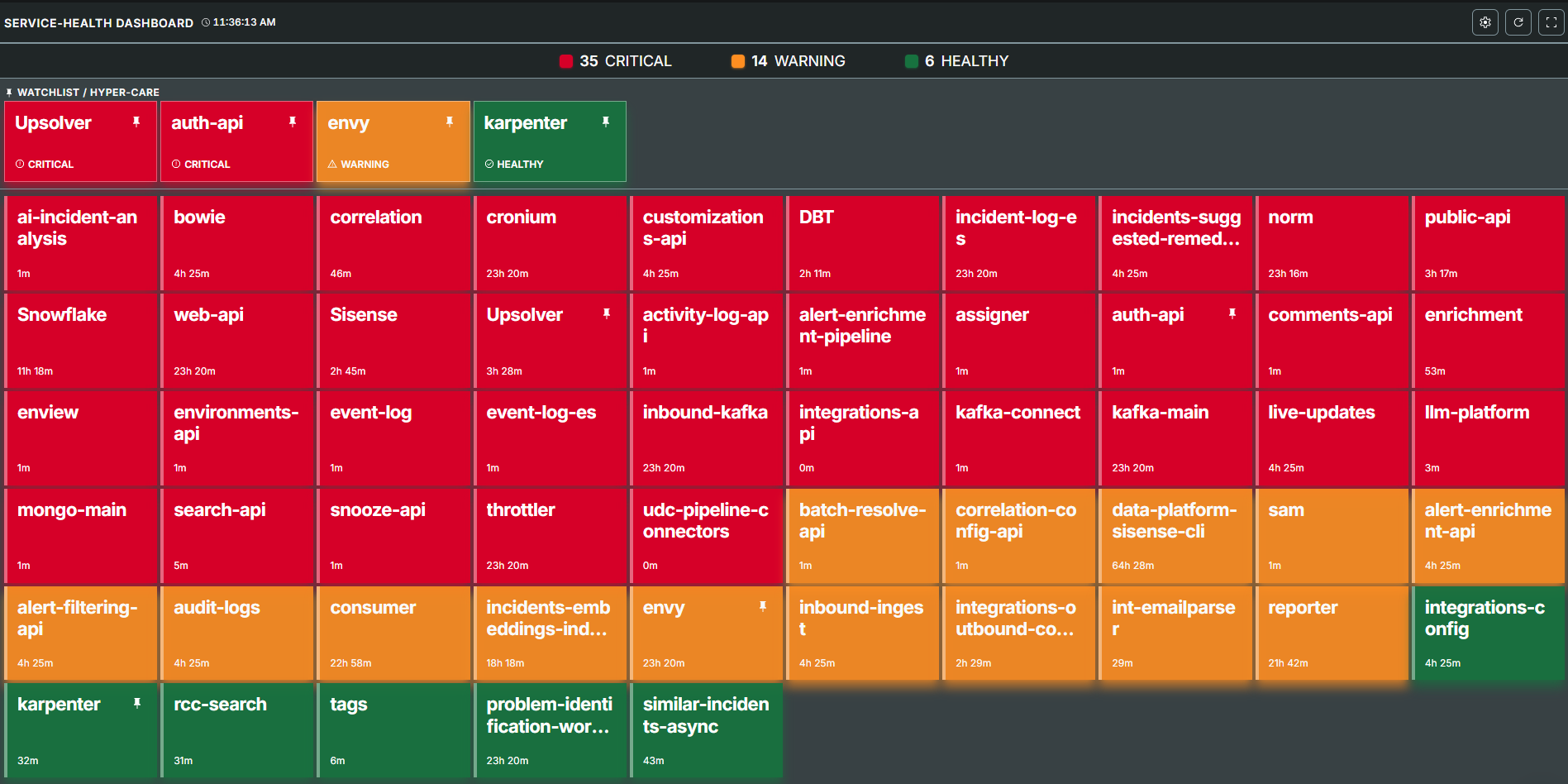
Health Dashboard
The Real-time Health Dashboard can be configured to monitor the services or entities most vital for your team. See the Health Dashboard documentation for details on configuration and dashboard management.
OIM Preprocessor management UI
You can now visually configure and test preprocessing function chains directly within the OIM Inbound integration configuration page, no manual JSON editing or guesswork required.
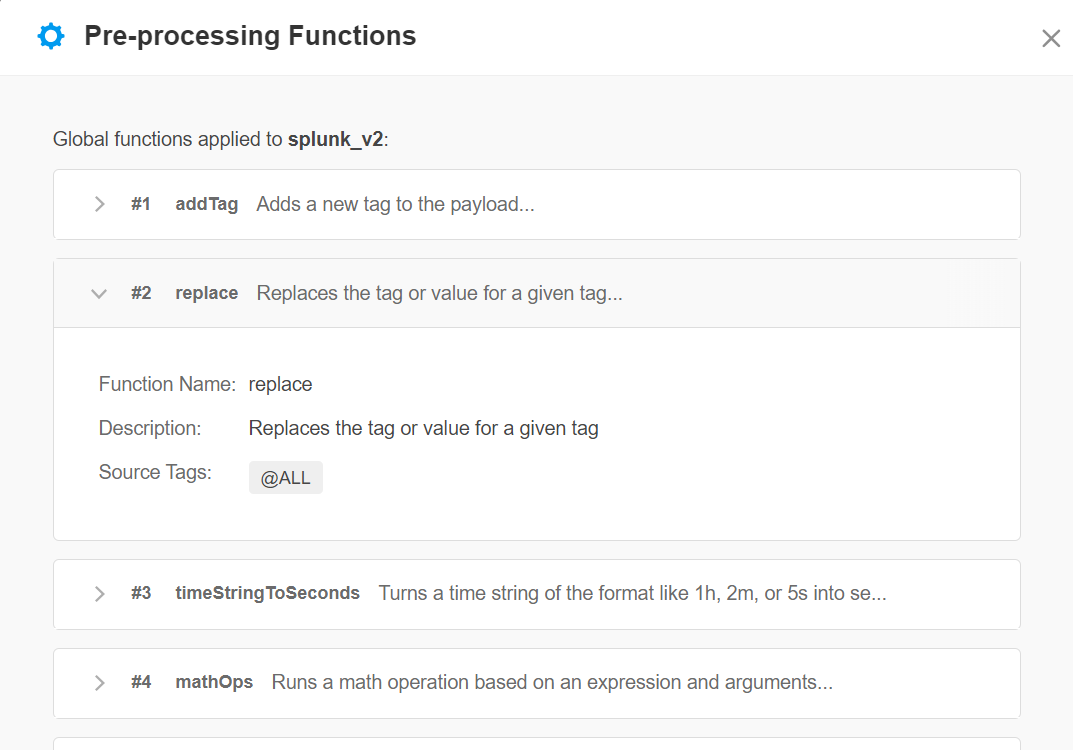
Preprocessor management
Paste in a sample payload to instantly preview the before and after output, and leverage 39+ transformations, such as tag manipulation, regex extraction, value mapping, array ops, math, date formatting, and more. Out-of-the-box default chains are pre-loaded for supported integrations and can be expanded or explored using a diff viewer and step-by-step visualization.
Learn more about using preprocessors in OIM in the Preprocessing Functions documentation.
SolarWinds Integration AI-Assisted Installer
The AI-assisted installer streamlines SolarWinds integration setup by automatically analyzing your SolarWinds instance and recommending optimal configurations. It reads your SolarWinds environment via the REST API, sends the collected data to BigPanda for AI-powered analysis, and provides entity-specific recommendations that can be applied with a single click.
Automatic discovery: Scans your SolarWinds instance to identify all monitored entities (nodes, interfaces, volumes, etc.) and their associated alerts.
AI-powered recommendations: Analyzes your SolarWinds configuration and previously ingested BigPanda alerts to suggest the best setup for each entity type.
Custom property detection: Automatically discovers and includes object properties — including custom properties — that were not previously surfaced by the standard installer.
One-click apply: Review the recommended configurations and apply them all at once, eliminating manual action template creation.
See the Solarwinds documentation for details on using the configuration AI-assistance.
OIM AI Config Generation
You can now automatically generate a starting configuration from a sample payload using AI.
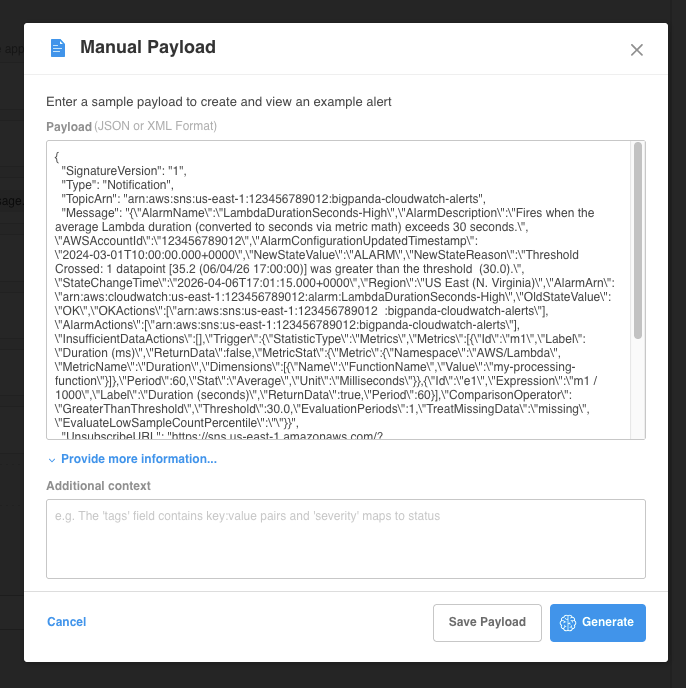
AI OIM Configuration Generation
With only a sample payload and additional AI guidance, BigPanda AI leverages a deep understanding of configuration best practices and tool normalization to populate configuration options that fit the exact payload uploaded.
Learn more about taking your event normalization to the next level in the Integration Manager documentation.
April 26 Console System Improvements
AutoShare rules can now skip or redirect notifications when an incident has already left the triggering environment.
Improved alert enrichment engine available in all test and sandbox organizations
AI Incident Assistant Releases April 2026
The following AI Incident Assistant features were released in April 2026:
Chat and Web Indexing
Index Slack or Teams conversations and publicly accessible websites, giving the Biggy even better context for AI-powered retrieval.
See the Indexing Settings documentation for more information.
Status Pages
Create and manage status pages to efficiently communicate with stakeholders during an incident.
See the Status Pages documentation for more information.
Major Incident Management API
Execute major incident workflows, update MIM templates, and retrieve lists of templates or MIM executions via the Major Incident Management API.
See the MIM API documentation for more information.
Trigger Actions
Monitor ServiceNow for records that match specific rules and automatically run an AI analysis when matching records are detected with Trigger Actions. AI analysis results are delivered to destinations you choose, keeping the right people in the loop at all times.
See the Trigger Actions documentation for more information.
Multi-Integration Configuration
Configure multiple instances of the same type of observability integration.
See the Integrate with AI Incident Assistant documentation for more information.
Large File Transfer
You can now upload larger files via the web app. Files up to 10 GB are supported.
See the Upload Files documentation for more information.
Activity Feed
Easily view active status pages, MIM executions, and recent release notes at any time from within the web app.
See the Activity Feed documentation for more information.
Web App Search
Find specific sections of the web app using the web app search. Easily navigate to a configuration page using only its name.
Improved MS Teams Permissions Documentation
The Microsoft Teams app permission documentation has been improved to include detailed explanations of each permission and why each one is required for use with Biggy.
See the Microsoft Teams App Permissions for AI Incident Assistant documentation for more information.
System Improvements
Added the ability to cancel or retry requests in the web app chat.
Web app chat now includes timestamps in results.
Linked Chat Platform Installations section was added to General Settings.
Added integration test button.
MIM now supports multiple chat tools.
AI Incident Prevention Releases April 2026
The following AI Incident Prevention features were released in April 2026:
Change Risk Custom Data Sources
Configure Custom Data Sources to select external data sources to include when using this profile to evaluate changes.
See the Change Risk Configuration documentation for more information.
March 2026
New features released in March 2026: ServiceNow 3.0 Store App, Incident Correlation, Service Desk Observability, BigPanda University Improvements, and more!
The BigPanda ServiceNow integration v3.0 is now available on the ServiceNow Store. This is a complete rebuild of the integration, certified by ServiceNow, that brings significant performance, security, and functionality improvements to your incident management workflows.
Key features
Faster incident creation - Alert processing is 94% faster, reducing the alert to ServiceNow ticket time from minutes to seconds. For high-volume environments, this means your team sees incidents sooner and can respond faster.
Lower impact on your ServiceNow instance - Intelligent caching and batch database operations reduce load on your ServiceNow instance by 90%, freeing up resources for other business-critical applications.
Stronger security posture - The v3 app meets ServiceNow Store certification standards, including encrypted credential storage, role-based access control, and full audit logging. All API credentials are stored using Password2 encryption.
Multi-organization support - Connect multiple BigPanda organizations to a single ServiceNow instance. This is ideal for enterprises managing separate business units, regional teams, or staging and production environments from one ServiceNow deployment.
Configuration with confidence - A new configuration interface provides version history, change comparison, and one-click rollback. You can review exactly what changed between versions and revert instantly if needed.
Assistance required
The BigPanda - ServiceNow v3 integration includes major architectural changes, including new security roles, and deprecated API patterns. The upgrade process must be planned and coordinated with your BigPanda account team.
Contact your BigPanda account team to discuss next steps to upgrade to a 3.x integration version.
ServiceNow App 3.1 Improvements - June 29, 2026
The v3 store app added incident-mapping and CMDB controls, all defaulting to off:
Block resolve on tags: Keep specific incidents open by tag. When a BigPanda incident matches the configured tag expression, the resolve-and-close sync is skipped and the ServiceNow incident state is left untouched. Uses the same tag-expression grammar as the rules engine.
Affected CIs population: Optionally write the CIs resolved from alert hosts to the incident's Affected CIs related list. The list is de-duplicated on re-share, and processing continues safely on instances without the ITSM plugin.
Email-based assignment: When the tag mapped to Assigned to holds an email address, BigPanda resolves it to the matching ServiceNow user. Non-email values resolve by user name as before.
AI Title in short description: Optionally use BigPanda's AI-generated incident title as the ServiceNow short description.
v3.101 - June 29th, 2026
Use BigPanda to automatically cluster related incidents based on shared attributes, infrastructure dependencies, and behaviors. You can run cluster analysis for specific time periods or view live correlation analysis for active incidents. This accelerates root cause identification and provides a clearer look at what’s happening in your environments.
This feature leverages the IT Knowledge Graph and AI to detect patterns across high-volume alert streams—identifying when multiple seemingly separate alerts are actually part of the same larger incident.
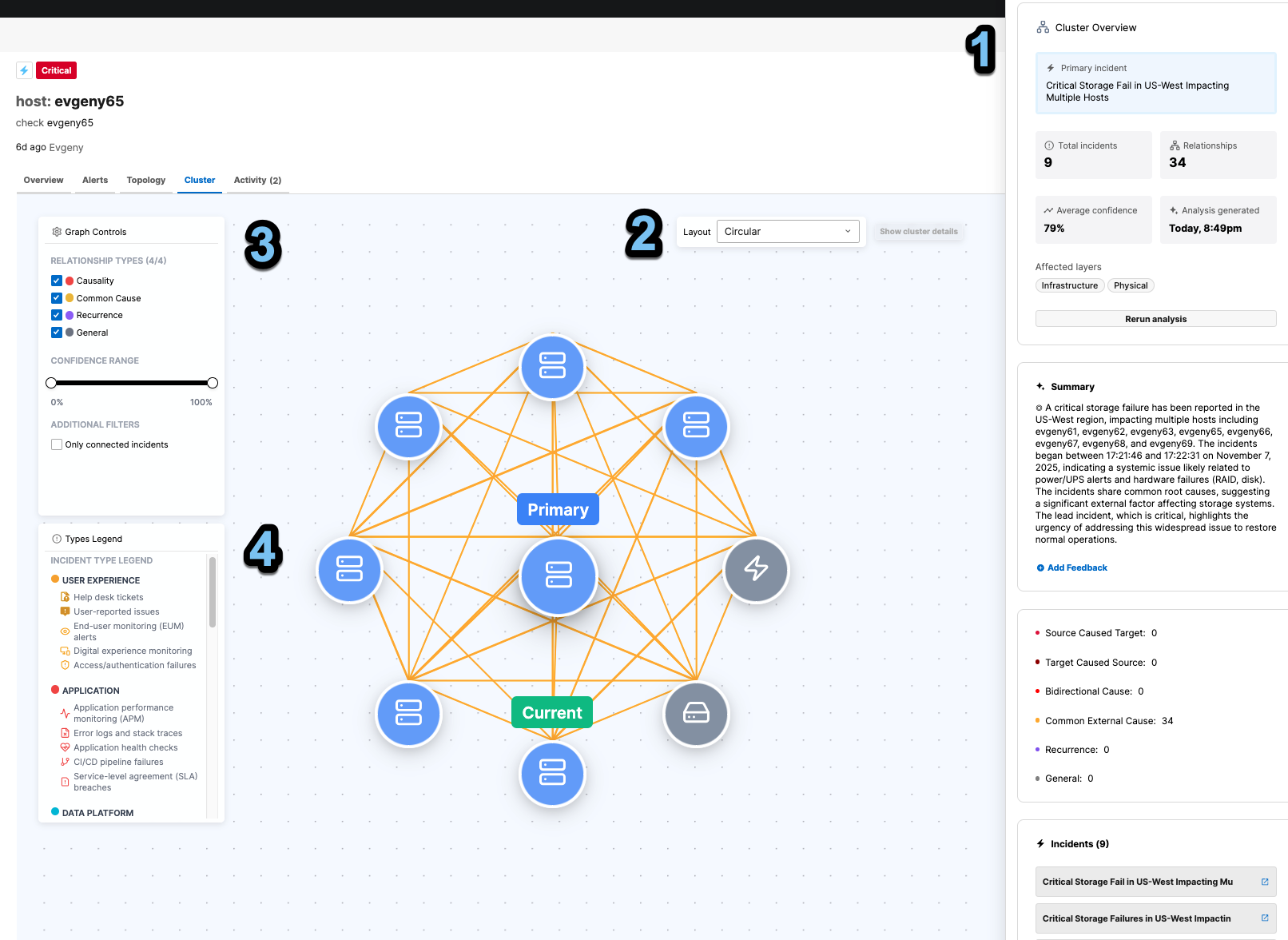
Key features
AI-powered analysis: BigPanda uses generative AI to analyze data from multiple data sources and infrastructure points to provide you with a comprehensive look at your incident history.
Accelerated root cause identification: Incident clusters make it easier to identify root cause and recurring issues.
Visualize downstream effects: Get a clearer picture of incident impact using interactive topology maps.
Read more about how to leverage incident clusters in Incident Correlation.
Many real issues are first reported through the Service Desk, but don’t immediately trigger investigation as the service desk and incident management processes are siloed. BigPanda Service desk incident correlation detects problems reported by end users via a service desk tool, and correlates those with monitoring data to accelerate the triage and resolution of user-reported outages.
Service desk detection brings the next level of AI enrichment and awareness right into your existing ITOps workflows. Leveraging the tool-agnostic incident engine and IT knowledge graph, service desk detection brings world-class visibility and context right to your operations teams.
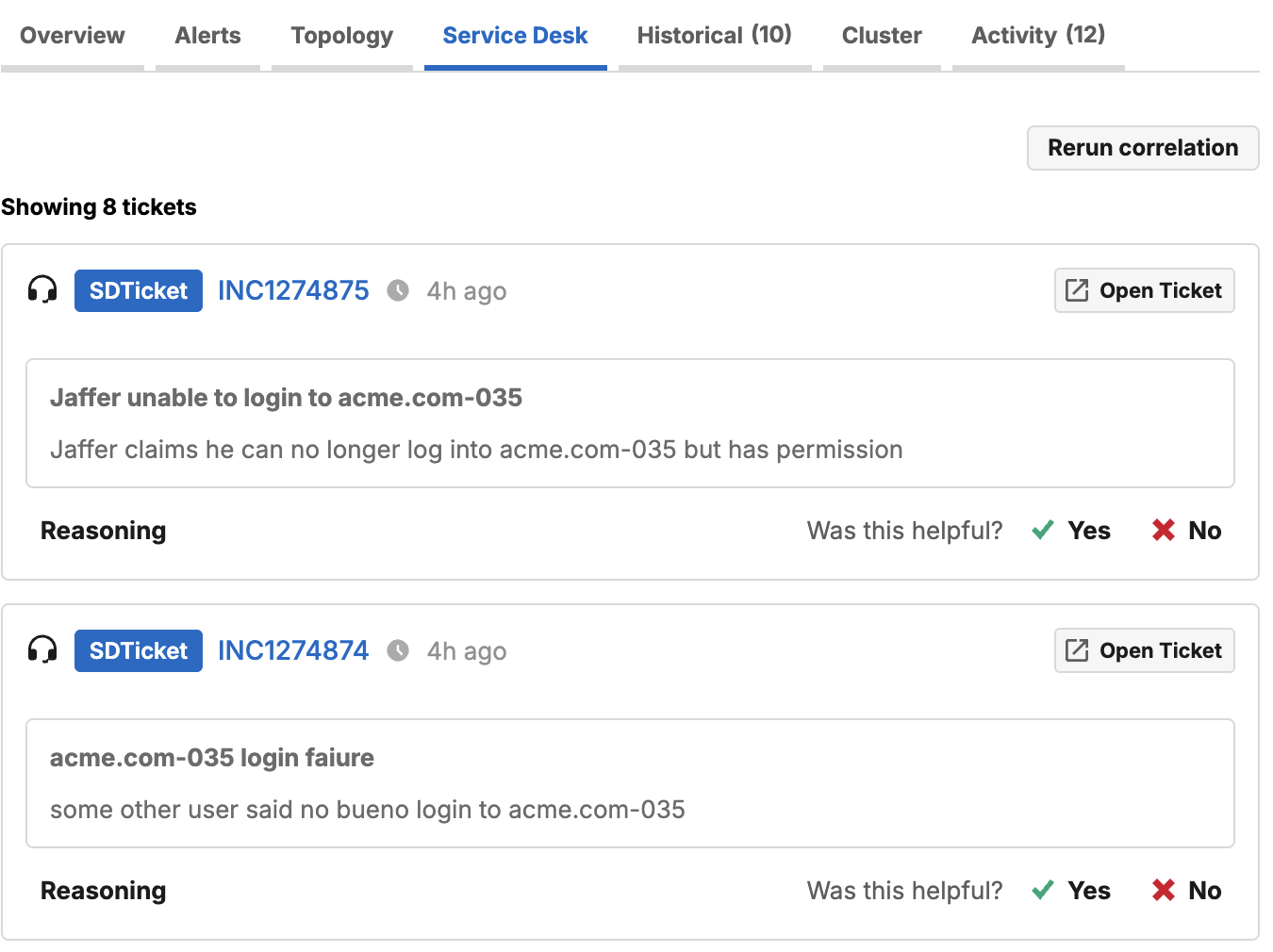
Service Desk Tickets
Start correlating service desk tickets to incidents with Service Desk Incident Correlation.
We have recently introduced several updates to BigPanda University to support continued learning across key platform capabilities:
Normalization: New course content focused on how BigPanda standardizes and enriches incoming data for more effective event correlation.
Topology: Updated learning on service relationships and dependency mapping to help users better understand impact and context.
Change Integrations:New training covering how change data can be incorporated into workflows to support faster, more informed incident triage.
We encourage learners to enroll in the Biggy Certification to earn their Credly credential and continue building their AIOps expertise.
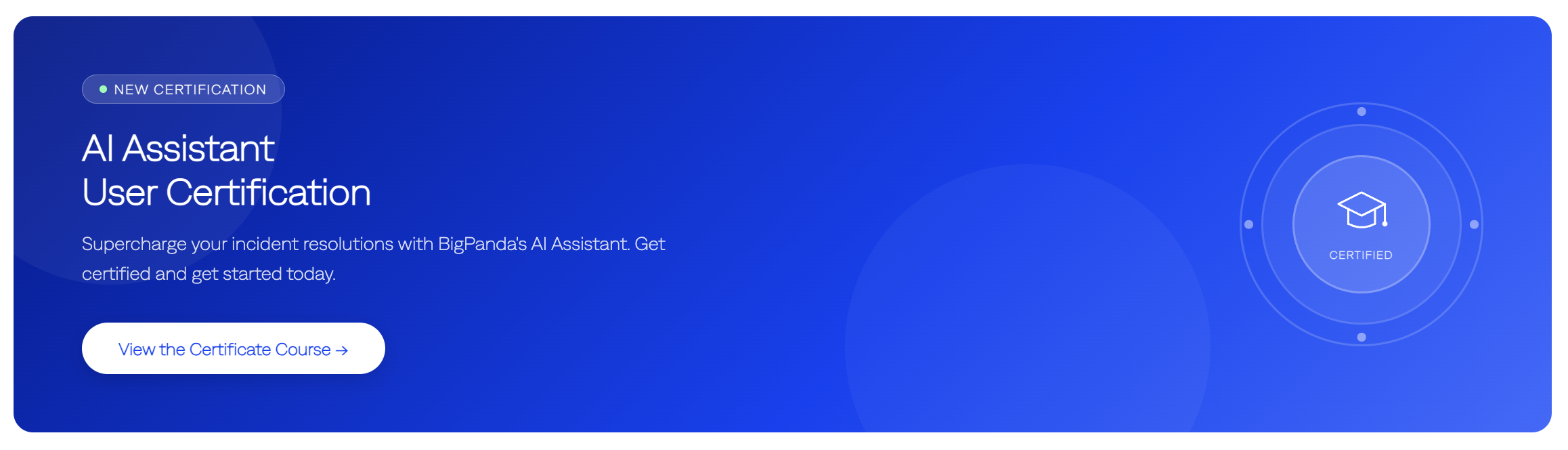
Lastly, you may notice that BigPanda University has received visual UI updates for a more streamlined and intuitive learning experience. As always, your learning history is safe and secure.
AI Incident Assistant Releases March 2026
The following AI Incident Assistant features were released in March 2026:
Web App Single Sign-On
Single Sign-On (SSO) can now be configured for web app login. As part of this update, an SSO login option now appears on the web app screen.
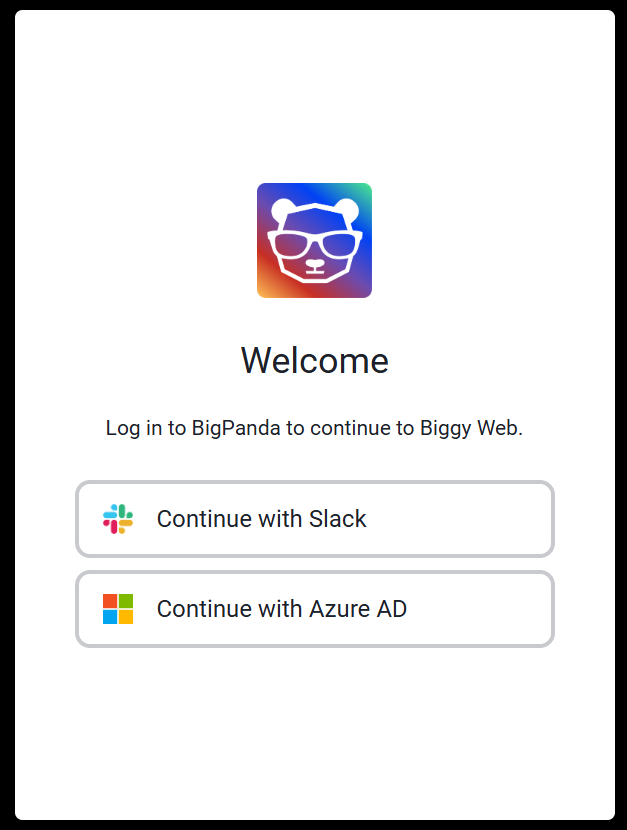
To enable SSO for the web app, your organization must already have SSO set up for AI Detection and Response.
If your organization is interested in enabling SSO, contact your BigPanda account team.
Document Upload Improvements
The Upload Documents page has been redesigned to make it easier and faster to manage and add files to Biggy’s knowledge. Files uploaded are now automatically indexed, speeding up the time it takes for the Biggy to gain context. As part of this update, you can now also delete files from the stored knowledge.
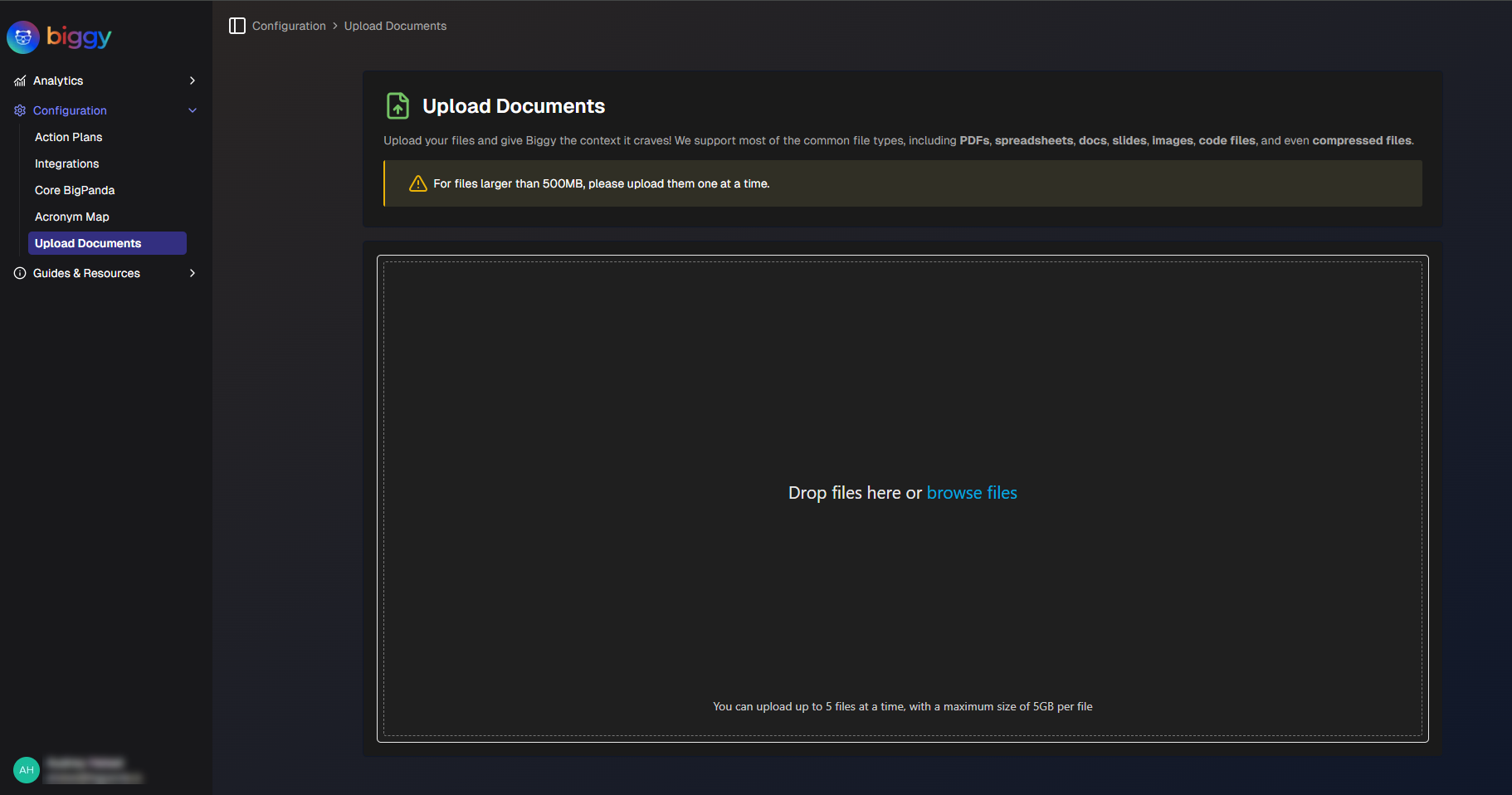
See the Upload Documents documentation for more information.
Data Counts Update
Data Counts visualization now includes a Graph DB Counts section, allowing you to see your current graph coverage for ITSM, CMDB, and Tacit Knowledge.
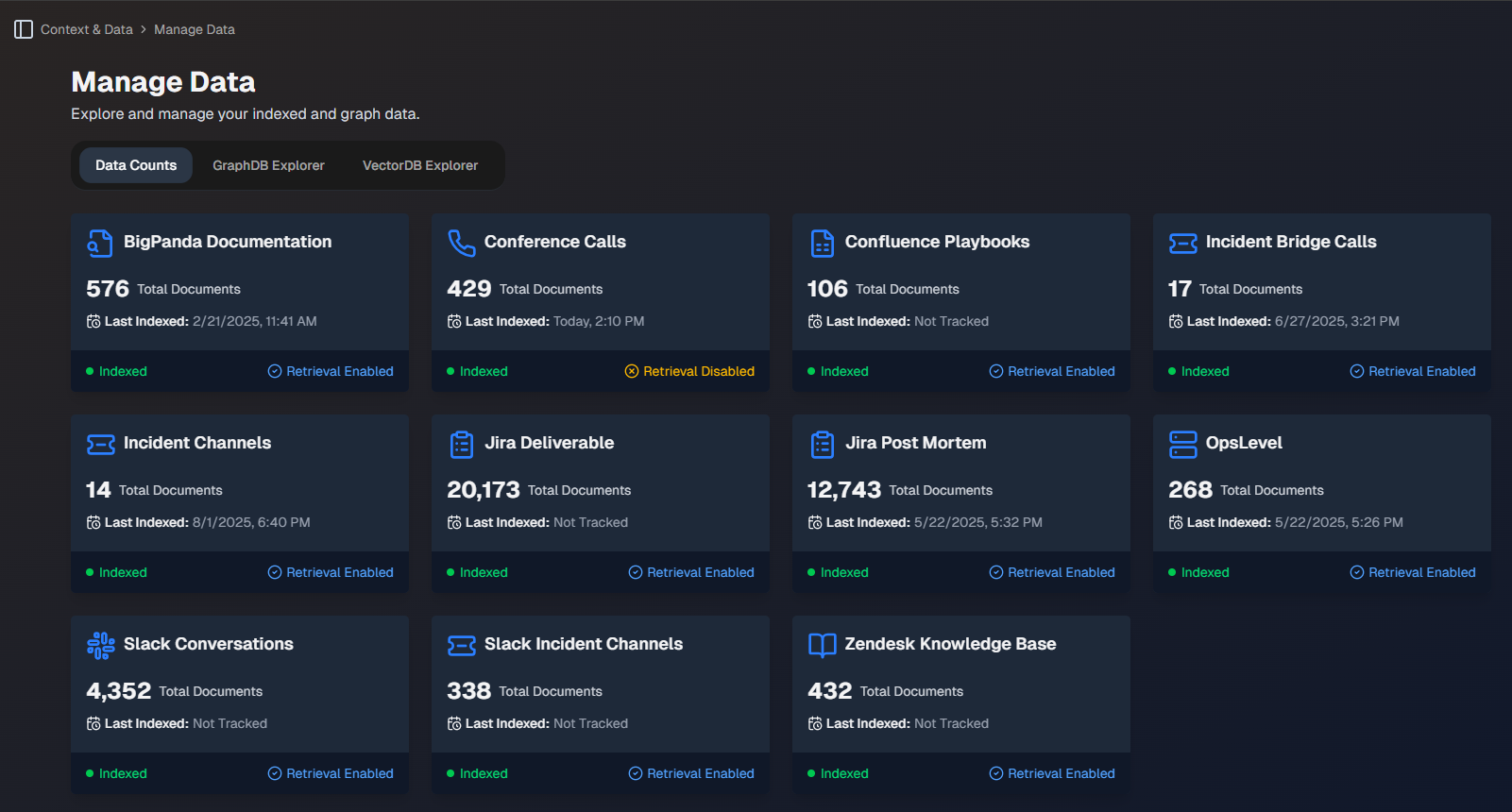
See the Manage Data documentation for more information.
Major Incident Management (MIM) Improvements
Several key improvements have been made to MIM:
You can set incident priority in the MIM template.
A default MIM template can be selected, which will always appear as the first option during template selection.
The Alpha Agent is available for MIM template actions.
You can choose to skip an action if no meaningful updates occurred.
On-call paging was added as a communication entity option.
See the MIM Templates documentation for more information.
Users and Roles APIs
The Users and Roles APIs are now available. Use these endpoints to retrieve users and roles, and update roles.
See the API Documentation for more information.
New Observability Integrations
The following new observability integrations are now available in beta release status:
LogicMonitor
SolarWinds
Thousand Eyes
See the Observability Integrations documentation for more information.
Roles and Users Pages Updates
The Roles and Users pages have been updated with a new look and feel. As part of this upgrade, you can now search for specific roles or users, and copy roles.
The Roles creation screen has also been updated to support granular access control for ServiceNow tables.
See the Manage Biggy Access documentation for more information.
AI Incident Assistant System Improvements
Feedback sentiment now appears in the AI Learning page.
Multiple ITSM tools can now be selected in action plans that reference ITSM integrations.
API key authentication was added to the MIR3 integration.
Login Methods was added to the General Settings page, allowing you to hide specific login methods.
The Monthly Active Users widget in the Usage Metrics dashboard now displays current month usage.
Indexing Settings now includes the option to index major incidents.
Dynatrace was added as an External Observability Source.
You can now assign a name to Transcripts in the web app.
Increased channel summary and transcripts goal preset character limit to 10,000 characters.
AI Incident Prevention Releases March 2026
The following AI Incident Prevention features were released in March 2026:
Change Risk Prediction Tuning
Analyze historical change outcomes to find a weight distribution that better identifies incident-causing changes.
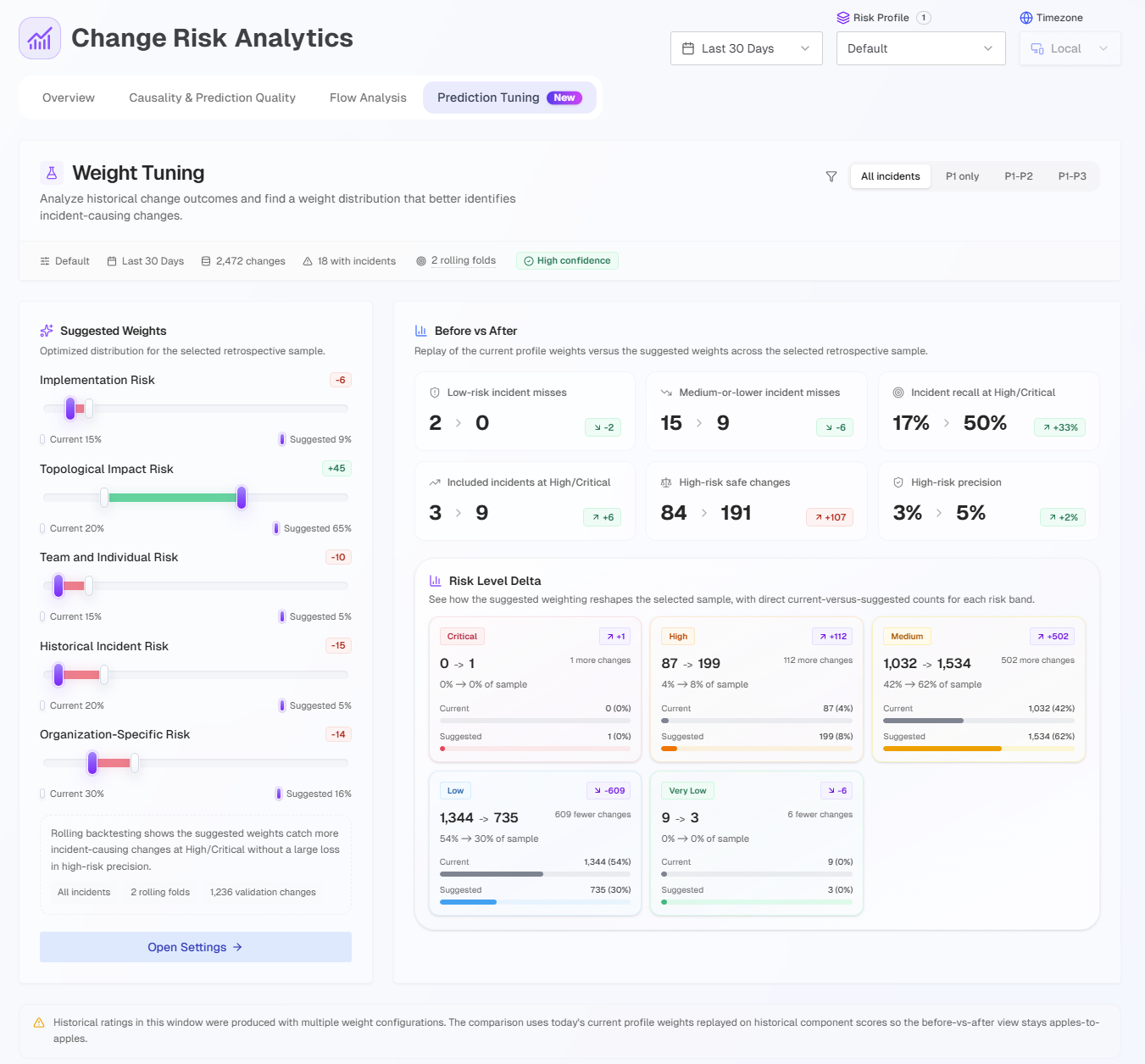
See the Change Risk Analytics documentation for more information.
AI Incident Prevention System Improvements
You can now select a time zone in Change Risk Analytics.
Added time range and change profile filters to Real Time Deconfliction.
February 2026
New features released in February 2026: AI Triage, Chat Platform Update, Major Incident Management (MIM), and more!
AI Triage orchestrates agents to instantly gather and analyze relevant data from various sources and streamline the manual validation and triage tasks that would otherwise bog down the incident response process for L1 teams.
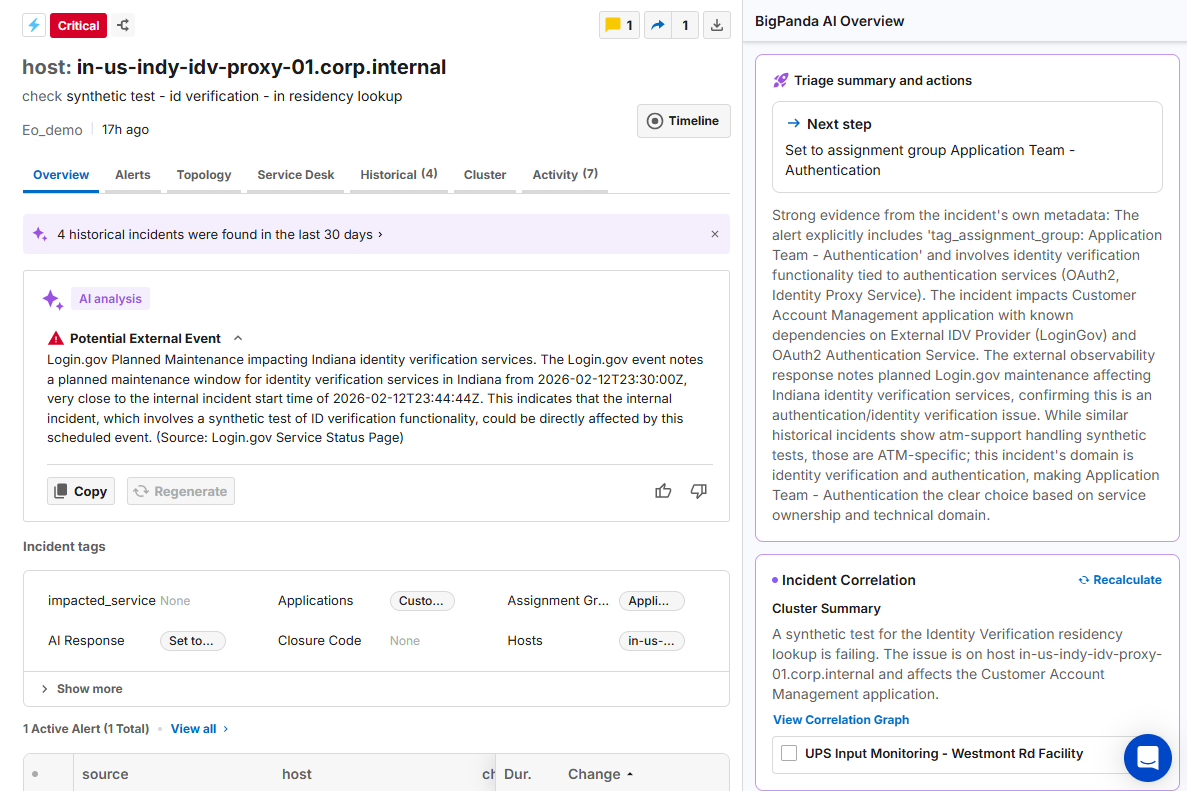
AI Triage context and suggestions
Accelerate incident detection and response with the cross-contextual knowledge coordination of AI to give frontline teams the data they need to act fast — reducing escalations, speeding up triage, and powering rapid resolution.
Learn more about how the full-context suite of AI Detection and Response makes rapid triage happen -- no experts required.
On March 2, 2026, BigPanda completed an upgrade to our chat platform. This upgrade is part of our continued efforts to improve our internal processes and serve you more efficiently. There is no change to your overall experience — you’ll continue to contact us the same way and receive the same level of service you expect.
AI Incident Assistant Releases February 2026
The following AI Incident Assistant features were released in February 2026:
Major Incident Management (MIM)
Biggy helps speed up the major incident management (MIM) process with automated workflows that keep your entire team up to speed.
Use customized templates for specific scenarios or services such as health checks, escalations, and updates. Orchestrate incident SMEs, and seamlessly sync updates across channels in both triggered and scheduled workflows.
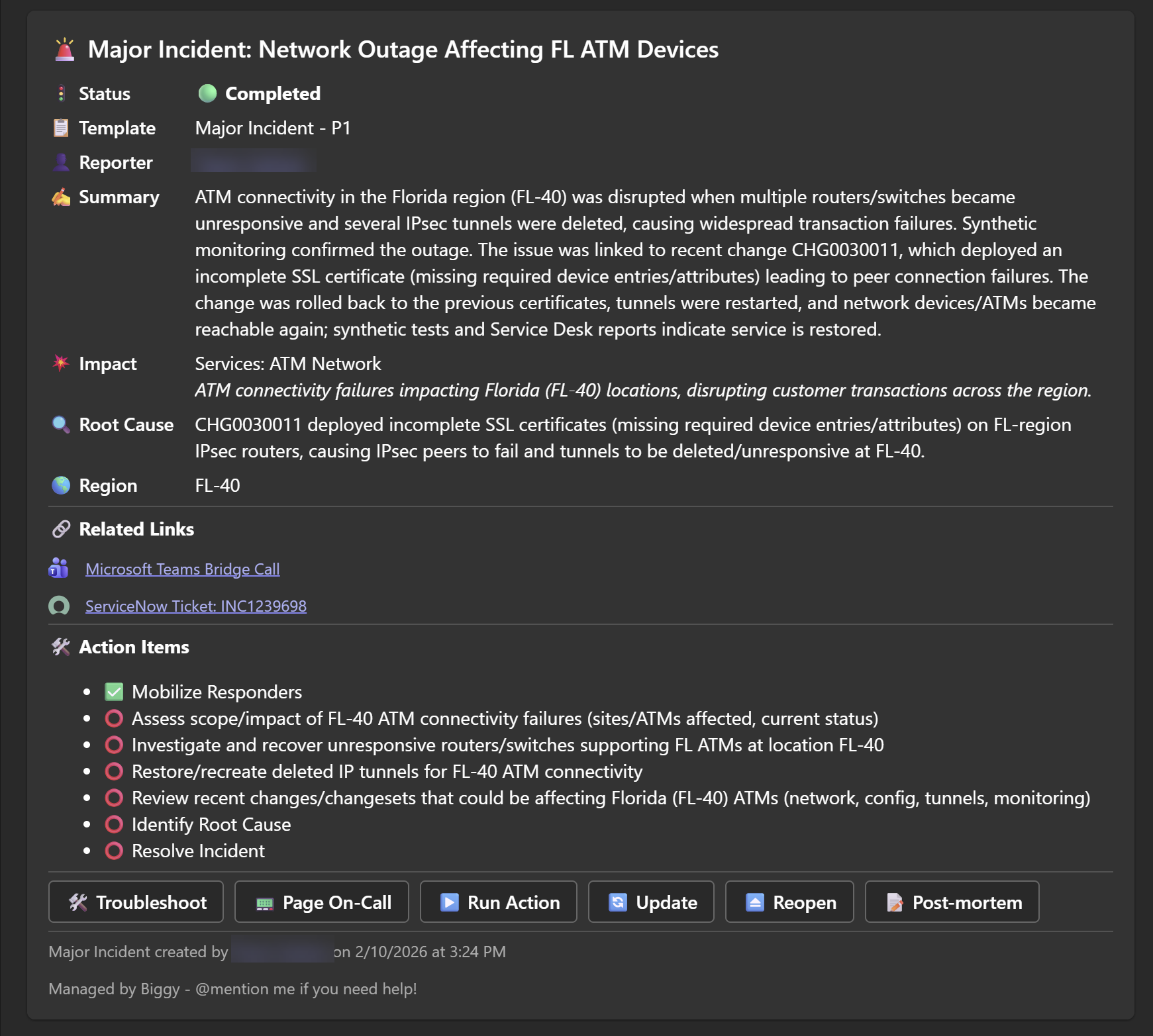
See the Major Incident Management documentation for more information.
Relay Client
Deploy a relay client in your private network to establish a secure outbound tunnel to Biggy. Access private observability tools, databases, and internal APIs without exposing inbound ports.
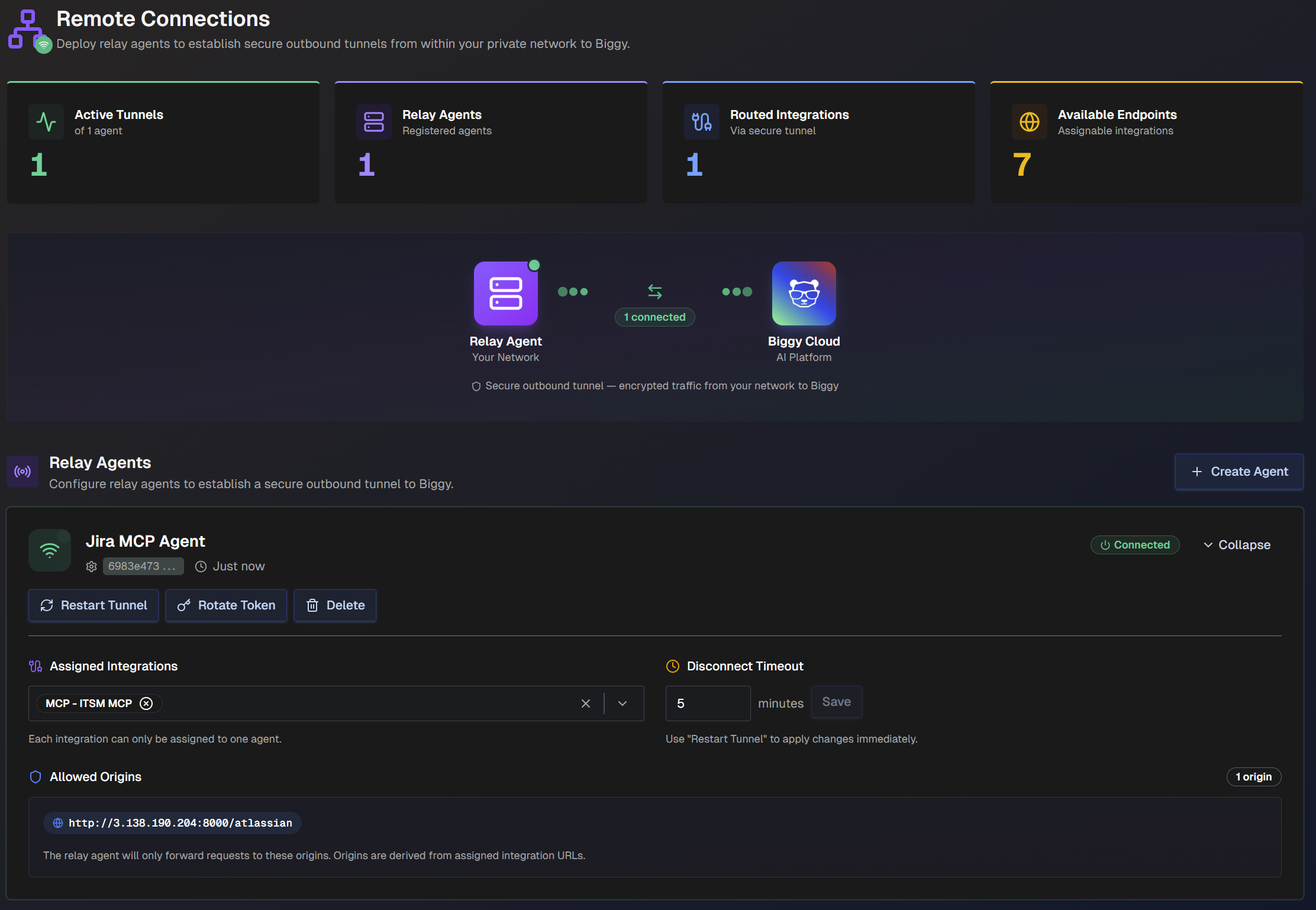
See the Remote Connections documentation for more information.
New Biggy API Endpoints
Several new Biggy API endpoints are now available:
Multi-Context Generation - Combine meeting transcripts and ServiceNow records to create a single report.
Transcripts - Retrieve available meetings or calls that Biggy has transcribed for your organization or request a transcript summary.
Action Plans - Execute an action plan, or retrieve action plan details or responses.
Model Context Protocol (MCP) - Use Biggy's action plans as remote MCP tools so your own AI agents can discover and call them via the standard Model Context Protocol.
Agent to Agent (A2A) - Use Biggy's Alpha agent via the A2A protocol so your own AI agents can send messages, stream responses, and poll task status using a standard JSON-RPC 2.0 interface.
See the Biggy API documentation for more information.
New External Observability Sources
The following SaaS products were added as external observability sources:
1Password
Aircall
Aqua Security
Confluent
Delinea
Dialpad
Discord
DocuSign
Docker
Dropbox
Epic Games
Fastly
GitGuardian
Harness
Incident.io
JFrog
Kaltura (US, EU, Australia, Asia Regions)
LaunchDarkly
Notion AI
PayPal
PlayFab
Pulumi
SendGrid
Snyk
Sonatype
Twitch
Unity
Veracode
Wiz
Xyleme (Mad Cap)
Zendesk
See the External Observability Sources documentation for more information.
New On-Call Integrations
The following new on-call integrations are now available in beta release status:
Use these integrations to enable paging and on-call schedule retrieval.
OpsRamp Integration
The OpsRamp observability integration is now available in beta release status. Integrate with OpsRamp to enable hybrid IT infrastructure monitoring, alerting, and resource management.
See the OpsRamp Integration documentation for more information.
System Improvements
Updated the Sensing and Knowledge page with an improved infographic.
Transcripts can now be deleted from the Transcripts dashboard.
You can now select whether an integration is Cloud or On-Prem. On-Prem integrations can connect via the Relay Client.
AI Incident Prevention Releases February 2026
The following AI Incident Prevention features were released in Feburary 2026:
Improved Change Risk Analytics
The Change Risk Analytics page has been updated with improved organization and visualizations. The page is now divided into three tabs, allowing you to easily navigate to the exact metrics that you need.
The new Flow Analysis visualization provides an interactive view of your change flow, helping you understand and improve your internal workflows.
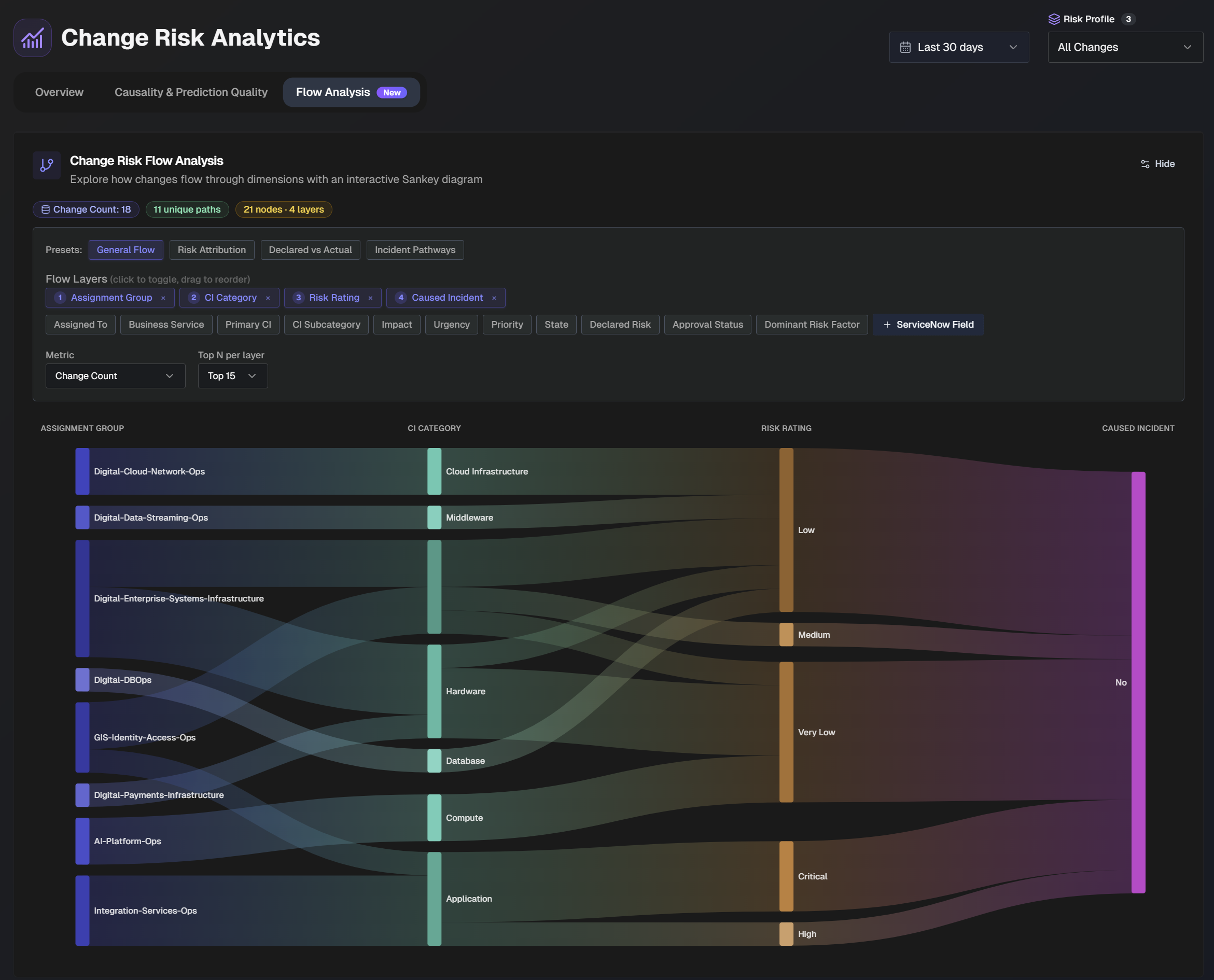
See the Change Risk Analytics documentation for more information.
Change Risk Configuration Improvements
The following improvements have been made to change risk configuration:
Field Visibility Settings - determine which fields appear by default in the Change Risk Dashboard Change Details tab.
Category Score Notification Thresholds - send a notification to stakeholders when a specific change risk category exceeds a defined threshold.
See the Change Risk Configuration documentation for more information.
System Improvements
Change risk scores are now posted to the change record in ServiceNow, allowing you to create automations based on risk level.
Deprecating Functionality
Problem Identification Dashboard Deprecation
To deliver a more streamlined and scalable analytics experience, BigPanda will retire the Unified Analytics Problem Identification dashboard on April 30, 2026. After this date, the dashboard will no longer be available. No other Unified Analytics capabilities are affected.
Going forward, we recommend using the Problem Management feature in AI Incident Prevention, which enables IT problem managers to analyze historical root cause, identify systemic issues, and resolve problems at scale to improve service reliability.
Customers do not need to take immediate action. Your BigPanda account team will help you understand how this change affects your environment and support a transition, if applicable.
To learn more about AI Incident Prevention or discuss next steps, please contact your BigPanda account team.
January 2026
New features released in January 2026: Jira Service Management Integration, AI Incident Assistant analytics and multi-context generation, Change risk rating updates
Create alerts and trigger notifications in Jira Service Management with our new integration. Leverage the rich context of BigPanda with detailed natural-language AI analysis of an incident and its correlated alerts, including suspected root cause, similar incidents, and related changes.
See our Jira Service Management documentation for details on how to get started.
AI Incident Assistant Releases January 2026
The following AI Incident Assistant features were released in January 2026:
Multi-Context Generation
Use the Multi-Context Generation dashboard to combine call transcripts, ITSM records, and chat messages into a single, high-quality artifact. Create dynamic, customized reports that reference multiple source types.
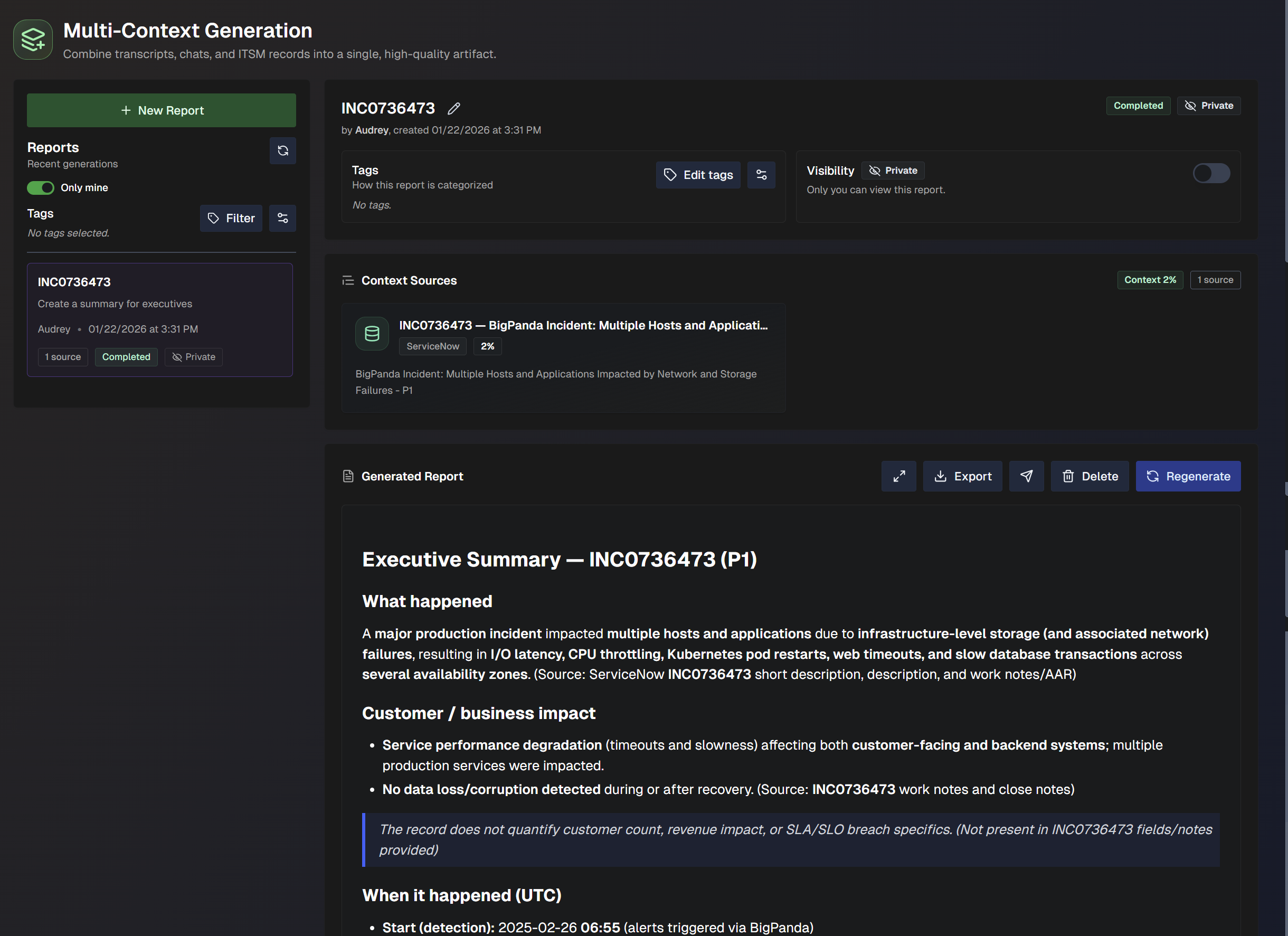
See the Multi-Context Generation documentation for more information.
Team Analytics
Biggy Teams let you track how specific users in your organization use Biggy. Use the Team Analytics page to view usage and feedback metrics to track your Biggy teams’ engagement.
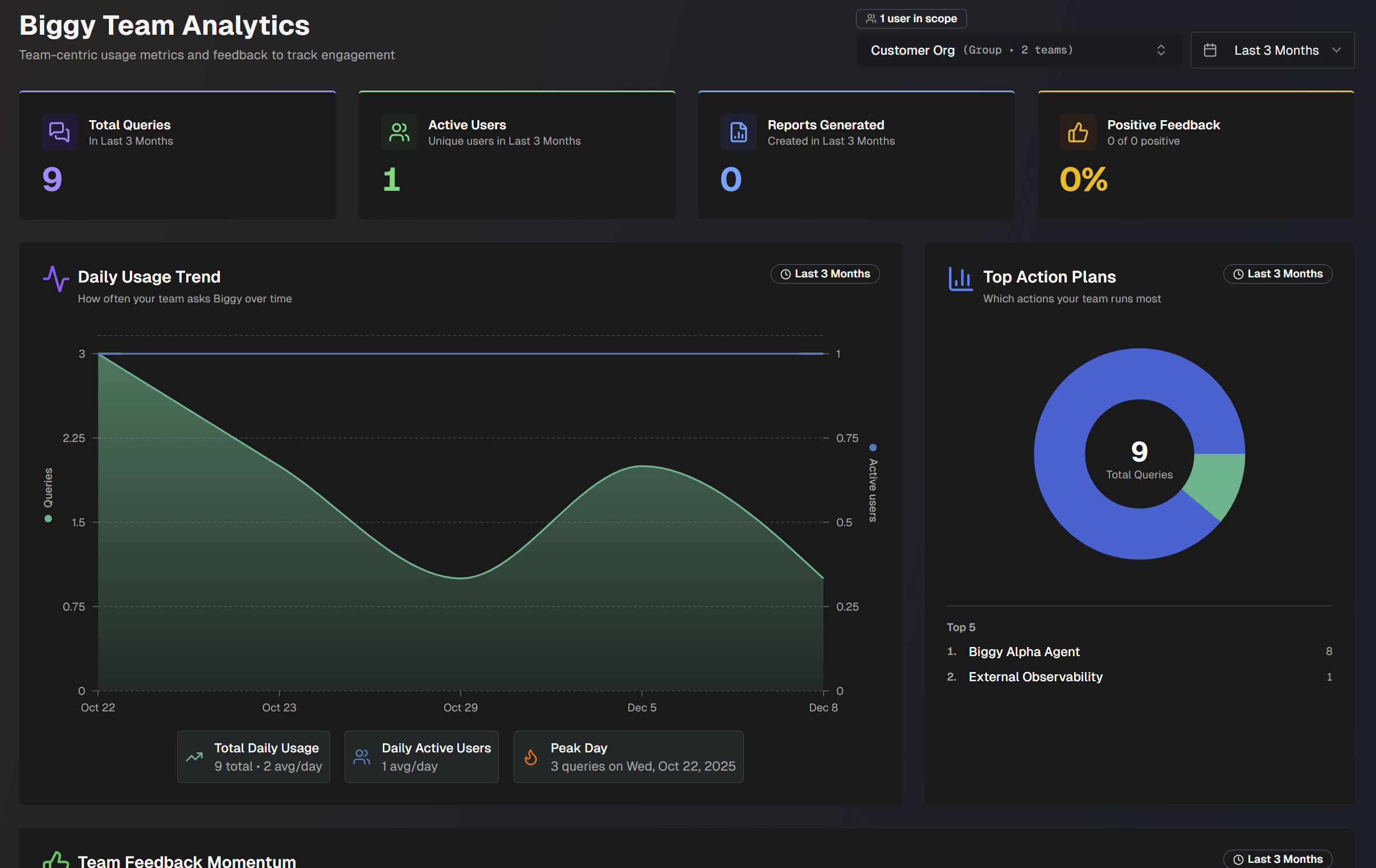
See the Team Analytics documentation for more information.
Prompt Generation Improvement
Creating prompt addendums and templates is even easier with the improved Generate with AI option.
Click Generate with AI to open the AI Prompt Helper, which allows you to create new prompts and refine existing ones with Biggy’s help.
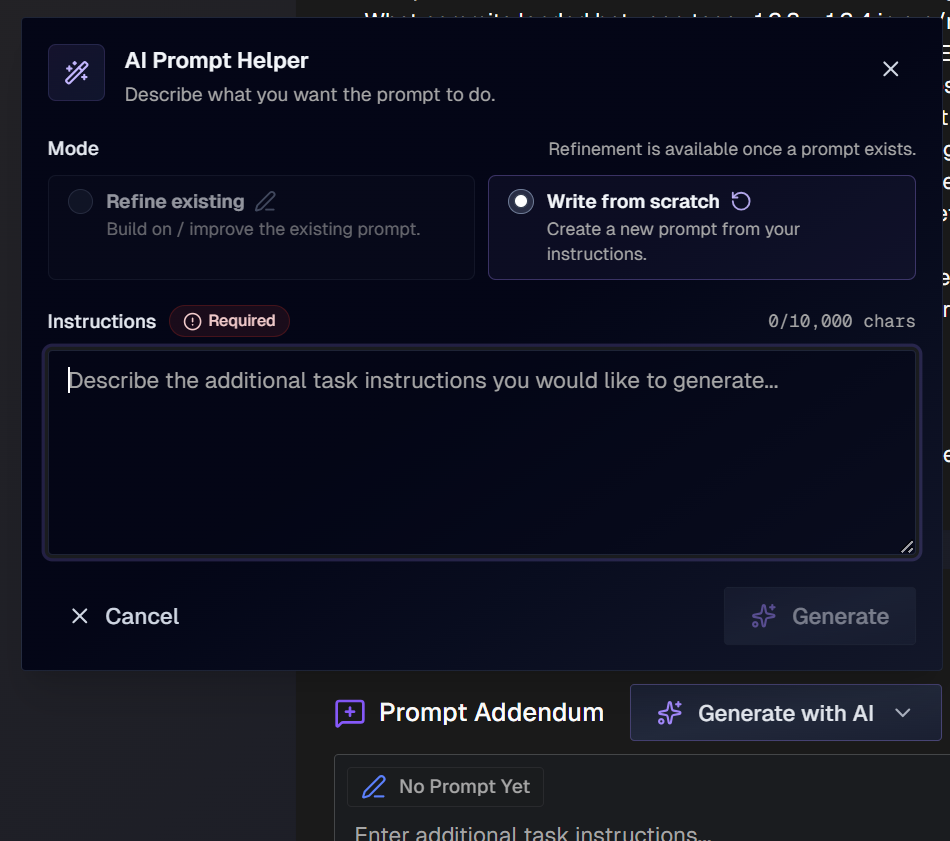
See the Generate with AI documentation for more information.
Web Chat Improvements
The Biggy web chat has had several key improvements, including:
Speech-to-text functionality
Image analysis
Reasoning levels for Biggy Agent chat
Improved UI
See the Biggy Web Chat documentation for more information.
Model Context Protocol (MCP) Integration
Connect your MCP server to Biggy to create custom observability or ITSM integrations.
See the MCP Integration documentation for more information.
Source Control Agent
The Source Control Agent action plan is an agent specialized in identifying code that caused an issue. This agent can access source control APIs to browse repositories, pull requests, commits, diffs, and file contents, helping identify whether recent code changes caused an issue.
See the Source Control Agent documentation for more information.
GitHub Integration
Use the Biggy GitHub integration to add code context or investigate recent code changes, pull requests, commits, and diffs.
See the GitHub Integration documentation for more information.
Join a Meeting API Endpoint
Invite Biggy to join a meeting via the API for transcription and summary purposes.
See the Join a Meeting documentation for more information.
AI Incident Assistant System Improvements
Search and filtering capabilities were added to the Integrations page.
OAuth 2.0 authentication option was added to the ServiceNow integration.
You can now generate a Scheduled Workflow.
AI Incident Prevention Releases January 2026
The following AI Incident Prevention features were released in January 2026:
Change Risk Rating Updates
The criteria for updating change risk ratings have improved. Change risk ratings are now recalculated only when a significant update is made to the change.
You can also now manually update the rating using the Force Re-Rate option.
See the Change Risk documentation for more information.
System Improvements
Recent ServiceNow queries are now saved in Large Context Analysis.
Deprecating Functionality
Problem Identification Dashboard Deprecation
To deliver a more streamlined and scalable analytics experience, BigPanda will retire the Unified Analytics Problem Identification dashboard on April 30, 2026. After this date, the dashboard will no longer be available. No other Unified Analytics capabilities are affected.
Going forward, we recommend using the Problem Management feature in AI Incident Prevention, which enables IT problem managers to analyze historical root cause, identify systemic issues, and resolve problems at scale to improve service reliability.
Customers do not need to take immediate action. Your BigPanda account team will help you understand how this change affects your environment and support a transition, if applicable.
To learn more about AI Incident Prevention or discuss next steps, please contact your BigPanda account team.
Feature Deprecations
As part of BigPanda's continual improvement, some older features and versions will be deprecated.
Upcoming Deprecations
BigPanda Analytics
We're rolling out an upgraded native analytics experience built right into BigPanda. Once activated for your organization, current active dashboards will be ready to use with no setup, so your team can start exploring data across the platform from day one. The new experience will begin rolling out to all organizations starting September 9, 2026.
With the new Analytics, you get:
Intuitive native dashboards: Dashboards run natively in BigPanda for a smoother experience.
AI-powered insights: Use AI to explore your data and ask questions in plain language.
All your data in one place: Bring together data from across BigPanda in a single view.
The legacy analytics view will be editable until November 16, 2026, and will retire on January 4, 2027.
See the BigPanda Analytics documentation for more information.
Deprecated Features
March 2026
Upcoming end of life for older BigPanda ServiceNow app versions
To provide customers with the best experience possible in ServiceNow, we are retiring support for older versions of the ServiceNow integration. Follow the instructions in our Update the BigPanda ServiceNow App documentation to upgrade to the latest version.
Integration version | End of life |
|---|---|
<v2.6.1 | September 1st, 2025 |
v2.8.0 | December 1st, 2025 |
v2.9.0 | March 1st, 2026 |
If you have any questions or concerns, please reach out to your account team.
November 2025
API Keys 2.0 API Deprecation
The API Keys version 2.0 endpoint will be deprecated on November 5, 2025. All organizations using the 2.0 endpoint will need to migrate to 2.1 before the end-of-life date.
The new endpoint for this API is https://api.bigpanda.io/resources/v2.1/apikeys
See the API Keys documentation for more information.
September 2025
Legacy ETL Platform End-of-Life
As part of BigPanda's commitment to delivering modern, cost-effective, and scalable data solutions, the legacy ETL data platform backed by Redshift will be deprecated on September 10, 2025.
Prior to this date, all data pipelines and services will be transitioned to our modern data-lake platform for data curation, storage, and processing.
See the Open Analytics Hub documentation for more information about accessing your data. Contact your BigPanda account team if you have any questions.
January 2025
MS Teams Connectors
Office 365 connectors have been replaced with Automate Workflows. All previous MS Teams integrations must be migrated to the new workflow integration before January 31, 2025.
June 2024
Classic Incident Console Deprecation
The New Incident Console delivers an intuitive incident feed with improved usability and performance, allowing you to accelerate your incident management workflow. As of June 2024, the updated interface became the default.
The option to switch back to the classic console will no longer be available on January 31, 2025. We invite you to take advantage of the improved features of the new console. Please see the documentation for more information.